
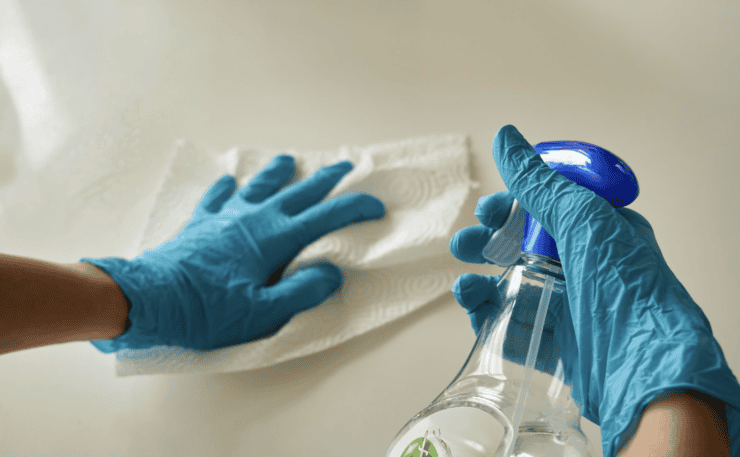
You have more choices than ever for green cleaning products these days, and because of that, it is easier to be fooled by products that are not very safe for the environment. If you learn how to identify what is high quality and environmentally conscious, you will save money and save the environment,
We have written a short guide here on how to identify those products that are safe to use and effective as well. You don’t have to make the same mistakes that many people do if you use the advice we have provided here.
Contents
Choose Safe, Non-Toxic Cleaners
When you’re picking household studios, you should be looking for a few important features. Namely, you want something that is safe and not toxic so it won’t cause skin irritation or any of the side effects that strong and harmful chemical cleaners cause. If it’s safe for your skin, it’s generally safe for the environment as well. Using non-toxic cleaners is an excellent way to ensure great air quality inside your home, and that’s especially important during the winter when you may keep the windows and doors closed more often.
Look for identifying marks on household cleaner packaging that say that the product is safer skin contact. Even something safe like that may not be completely safe for your eyes or your airways, and you still need to practice caution using household cleaners of any kind. Simply buying green cleaning products may not be enough to prevent toxins from entering your home and affecting the environment. You can choose products that are labeled Safer Choice, which is run by the EPA. This label identifies products that are going to cause very little to no harm to the environment. These can replace many of the household products you have in your home or that you often use and offer you a safer solution.
You can also check the EPA website and see which products are listed there as safe for the environment and good choices for environmentally conscious people. The EPA monitors and regulates household cleaning products, and you can use their website to find tons of great information on safe-to-use household cleaners.
Avoid These Cleaning Products
“Green” on a cleaning product label doesn’t always mean what it should. Sometimes, it simply means that the manufacturers have made an effort to reduce toxic chemicals or to increase the use of natural ingredients. Other times, it really means that these are environmentally friendly products. How can you tell the difference? Well, you will want to start by looking at the ingredient list.
PFAS are what are known as “forever chemicals,” and that classification simply means that they linger. They will stay in your home for months or even years, in some cases, causing harm over time. You can use EWG (Environmental Working Group) verified cleaning products to avoid all PFAS and other harmful components. Some products will have the EWG symbol on their packaging, but you can check the EWG website for more info on the list of verified products.
PFAS can be found in glass cleaners, hard surface cleaners, carpet treatments, dishwashing rinse aids, and air fresheners. These are not the only toxic chemicals to avoid, but they are some of the most prevalent. You should also avoid parabens and VOCs (volatile organic compounds) in your cleaners. Take time to look at the label and look for these culprits.
What can toxins like these do to you? They could cause respiratory problems, skin rashes, headaches, and a variety of allergy reactions. Some people can’t pin down exactly what toxins in their home do to them other than to simply say that they feel unwell. If you want to be healthier and live greener, then eliminate parabens, VOCs, and PFAS from your cleaning products. These include ingredients that would be listed as propylparaben methylparaben, butylparaben, trifluoroacetic acid, perfluorosulfonic acid, and ethylparaben.
If you are looking at a label for a cleaning product and you are not sure whether the ingredients are safe, take a minute and check on your phone. It is so easy to do a search to determine whether chemical ingredients are harmful or not. Once you can keep them out of your shopping cart, it is simple to keep them out of your home.
Choose Greener Cleaning Practices
There is more to green cleaning in your home than just choosing the right cleaning products, and we want to take a few moments to discuss that as well. The way you clean is very important if you are going to conserve resources and protect the environment.
Methods of green cleaning should be applied to hired cleaning services as well. If you have a professional cleaning crew come and organize and do some work in your home, then you should ensure they are using green cleaning methods too. Don’t just assume that all home cleaning professionals will use environmentally conscious cleaning techniques.
Ask yourself some questions about your cleaning practices to help keep them up to par:
- Am I using reusable or disposable cleaning supplies?
- Am I wasting water or conserving it as I clean?
- Is there a more energy efficient way to clean than what I am doing?
- Am I making use of natural resources like sunlight and airflow to help with my cleaning?
- Am I reusing water or tossing it out as soon as it gets dirty?
There are some cleaning methods that people use without thinking about simply because that is what they learned to do. They never think about a better or different way that may use fewer resources and may be better for the environment. This is what we want to help you to think about here as you consider greener cleaning practices.
We hope this information proves helpful and empowers you to keep a clean home in a way that is great for the environment. It is easier to do your part when you know what to look for and how to conserve resources.